When evaluating a wide format printer, most businesses focus on size, speed, and media compatibility. But one of the most important, and often overlooked, decisions is ink type.
The difference between dye ink and pigment ink directly impacts:
- Color vibrancy
- Durability
- Water resistance
- Fade resistance
- Media compatibility
- Long-term cost
If you’re printing construction drawings, marketing posters, retail signage, or fine art, understanding ink chemistry can help you choose the right system for your workflow.
Let’s break it down clearly.
What Is Dye Ink?
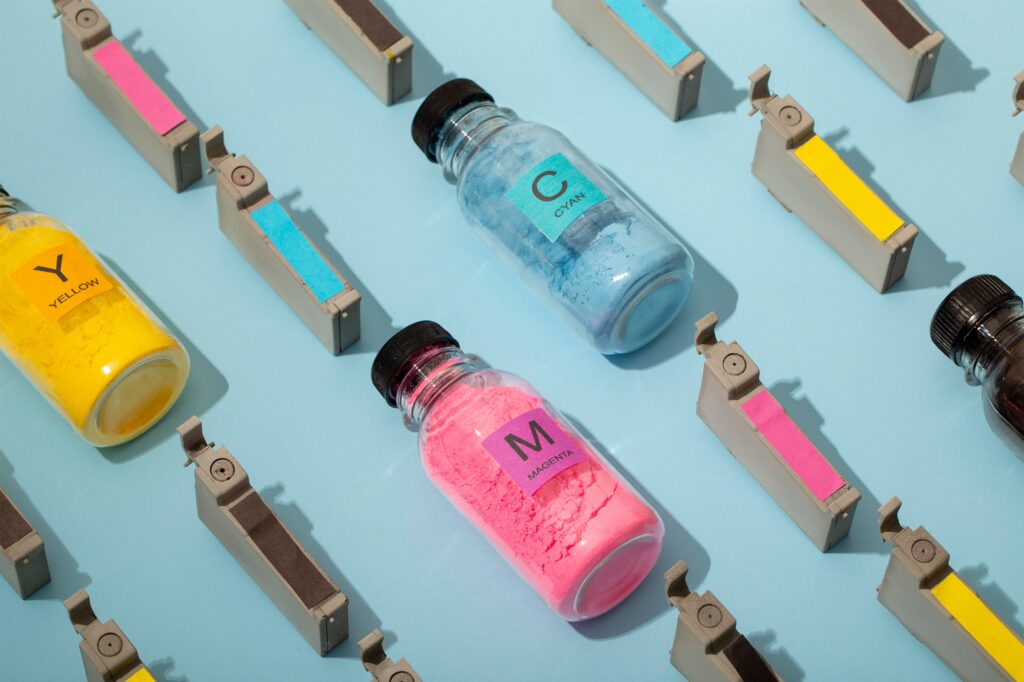
Dye ink is made from colorants that are fully dissolved in liquid. The dye molecules bond with the paper or media surface, producing extremely vivid colors.
Because dye is absorbed directly into the material, it creates smooth transitions and bright saturation.
Key Characteristics of Dye Ink
- Highly vibrant colors
- Excellent for photo printing
- Lower upfront printer cost
- Faster drying on certain coated papers
- Generally less expensive ink systems
Dye ink has long been popular in photo labs and graphic design environments where color intensity matters most.
What Is Pigment Ink?
Pigment ink uses tiny solid particles suspended in liquid. Instead of soaking fully into the media like dye ink, pigment particles sit on or near the surface and bond to it.
This structural difference dramatically affects durability.
Key Characteristics of Pigment Ink
- Superior fade resistance
- Water resistance
- Smudge resistance
- Better archival longevity
- Strong performance on plain and coated papers
Pigment inks are commonly used in professional graphics, technical printing, and archival applications.
The Core Differences: Dye vs. Pigment
Let’s compare them side-by-side in practical terms.
1. Color Vibrancy
Dye Ink:
Produces brighter, more saturated colors with smoother gradients. Ideal for:
- Photography
- Posters
- Retail graphics
- Marketing displays
Pigment Ink:
Still delivers strong color but may appear slightly less vibrant compared to dye in direct comparison. However, modern pigment systems have narrowed this gap significantly.
If maximum color pop is your priority, dye ink has historically had the edge, but the difference today is smaller than it used to be.
2. Water Resistance
Dye Ink:
More prone to bleeding when exposed to water unless specially treated.
Pigment Ink:
Naturally more water-resistant because particles sit on the surface and bond more firmly.
For environments where prints may encounter moisture—construction sites, outdoor signage, retail windows—pigment ink is typically the safer choice.
3. Fade Resistance (Longevity)
This is one of the biggest differentiators.
Dye Ink:
More susceptible to UV fading over time, especially in sunlight.
Pigment Ink:
Offers significantly better resistance to UV light and environmental exposure.
For:
- Long-term signage
- Gallery displays
- Archival prints
- Corporate branding materials
Pigment ink usually wins.
4. Media Compatibility
Dye Ink Works Best On:
- Glossy photo paper
- Coated media
- Specialty art papers
Pigment Ink Works Well On:
- Bond paper
- Matte media
- Canvas
- Vinyl
- A wider variety of substrates
If your business prints on multiple media types, including vinyl and canvas, pigment ink systems tend to be more versatile.
5. Black Density and Line Clarity
For architecture, engineering, and construction firms printing CAD drawings:
Pigment ink typically produces:
- Deeper blacks
- Sharper lines
- More water-resistant plan sets
Dye ink can still perform well, but pigment often provides stronger durability for jobsite use.
What Is a Wide Format Printer and What Can You Use It For? →
Which Ink Type Is Better for Your Industry?
Instead of asking which is “better,” ask which is better for your workflow.
Architecture & Engineering Firms
You likely need:
- Precise line accuracy
- Durable plan sets
- Water resistance
- Smudge resistance
Pigment ink is typically the better choice.
Marketing & Retail Graphics
You may prioritize:
- Vibrant colors
- High-impact visuals
- Indoor display
Dye ink can produce stunning results, but many modern pigment systems now deliver comparable vibrancy with better longevity.
Fine Art & Photography
Photographers often prefer dye for:
- Smooth color transitions
- High gloss photo finishes
However, professional galleries and archival printers frequently choose pigment because of its fade resistance and archival performance.
Construction & Jobsite Printing
Plans exposed to dirt, moisture, and heavy handling benefit from:
- Water resistance
- Smudge resistance
- Durability
Pigment ink is typically the stronger option.
Cost Considerations
Upfront Printer Cost
Dye-based printers are sometimes less expensive initially.
Ink Replacement Costs
Varies by manufacturer and usage volume.
Long-Term Value
If you need to reprint materials due to fading or water damage, pigment may actually reduce long-term costs despite slightly higher ink prices.
Durability often translates to fewer reprints.
Wide Format Printer Maintenance Tips: Extend Your Printer’s Lifespan →
Environmental and Workflow Factors
Modern wide format printers, whether dye or pigment, often include:
- Advanced color calibration
- Automated maintenance cycles
- Network integration
- Secure print release options
When evaluating systems, consider:
- Your monthly square footage
- Media types used
- Indoor vs outdoor exposure
- Client expectations
Ink choice should align with your real-world conditions, not just lab comparisons.
Common Misconceptions
“Dye is always cheaper.”
Not necessarily. Total cost depends on volume, reprints, and media waste.
“Pigment colors look dull.”
That may have been true years ago, but modern pigment ink systems produce rich, professional-quality output suitable for marketing and design.
“It doesn’t matter which ink I use.”
It absolutely does, especially if durability, archival quality, or environmental exposure are factors in your workflow.
Dye ink delivers exceptional vibrancy and smooth gradients, making it ideal for photo-centric applications and indoor displays.
Pigment ink offers superior durability, water resistance, fade resistance, and versatility across media types—making it the preferred choice for many businesses printing technical drawings, signage, and long-lasting graphics.
The right answer depends entirely on your application, volume, and environment.
If you’re unsure which ink system makes the most sense for your wide format printing needs, Emerald Document Imaging can help you evaluate your workflow and select the right solution.
Reach out to explore wide format printing options for your business →