Human Resources departments sit at the center of some of the most document-heavy workflows in any organization. From resumes and offer letters to I-9s, W-4s, benefits forms, performance reviews, and disciplinary records, HR teams manage highly sensitive information that must be accurate, accessible, and secure.
Yet many HR departments, especially in small to mid-sized businesses, still rely on paper files, filing cabinets, shared drives, or inconsistent digital systems. These outdated practices slow hiring, complicate onboarding, and create communication gaps between HR, management, payroll, and employees.
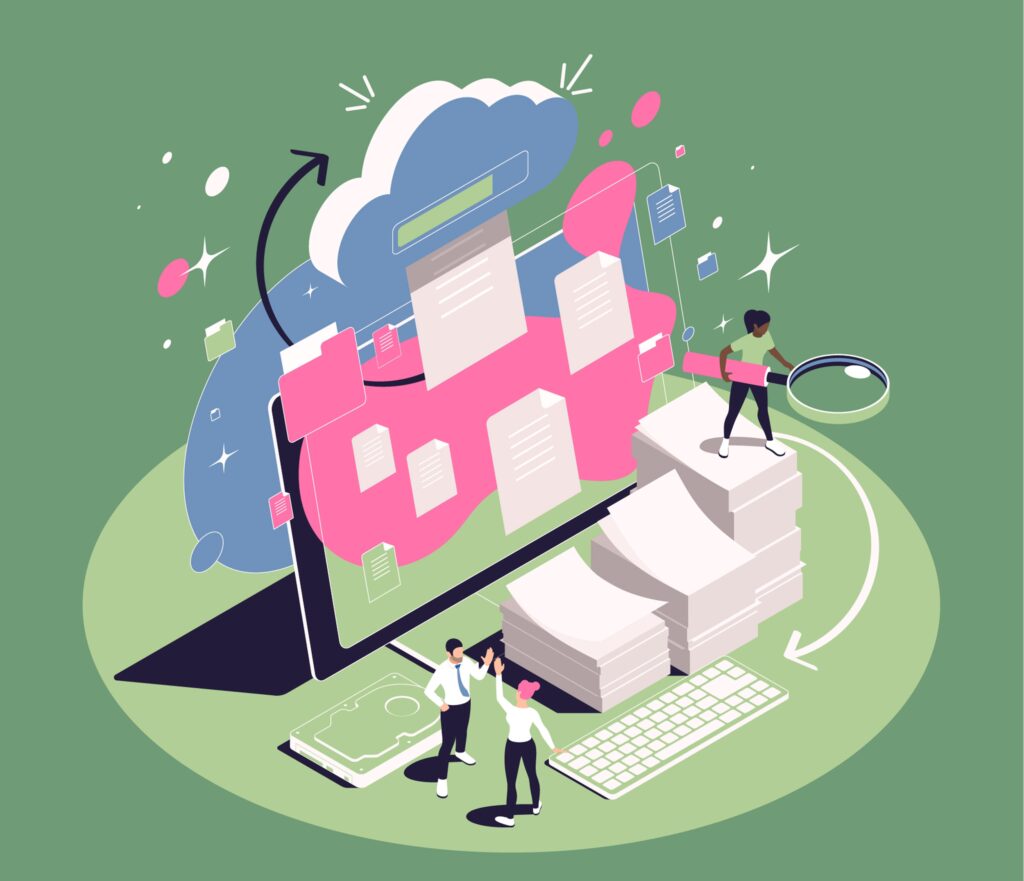
Professional document scanning for HR files transforms these workflows. By digitizing employee records and centralizing them in a secure, searchable system, organizations can significantly improve hiring speed, onboarding efficiency, and internal communication, while also strengthening compliance and data security.
This article explores how scanning HR files delivers operational and strategic benefits across the entire employee lifecycle.
The Paper Problem in HR Departments
HR teams deal with documents at every stage of employment:
- Job applications and resumes
- Background checks
- Offer letters and contracts
- I-9 and W-4 forms
- Benefits enrollment paperwork
- Training certifications
- Performance evaluations
- Disciplinary actions
- Termination and exit documents
When these records exist primarily on paper, HR departments face common challenges:
- Slow document retrieval
- Duplicate or missing files
- Inconsistent filing practices
- Security and privacy risks
- Difficulty supporting remote teams
- Poor collaboration with payroll and management
Scanning HR files addresses these issues directly.
How Document Scanning Improves the Hiring Process
Hiring is often the first place where inefficiencies become visible.
1. Faster Access to Candidate Information
Paper resumes and applications require manual sorting, copying, and distribution. With scanned HR documents:
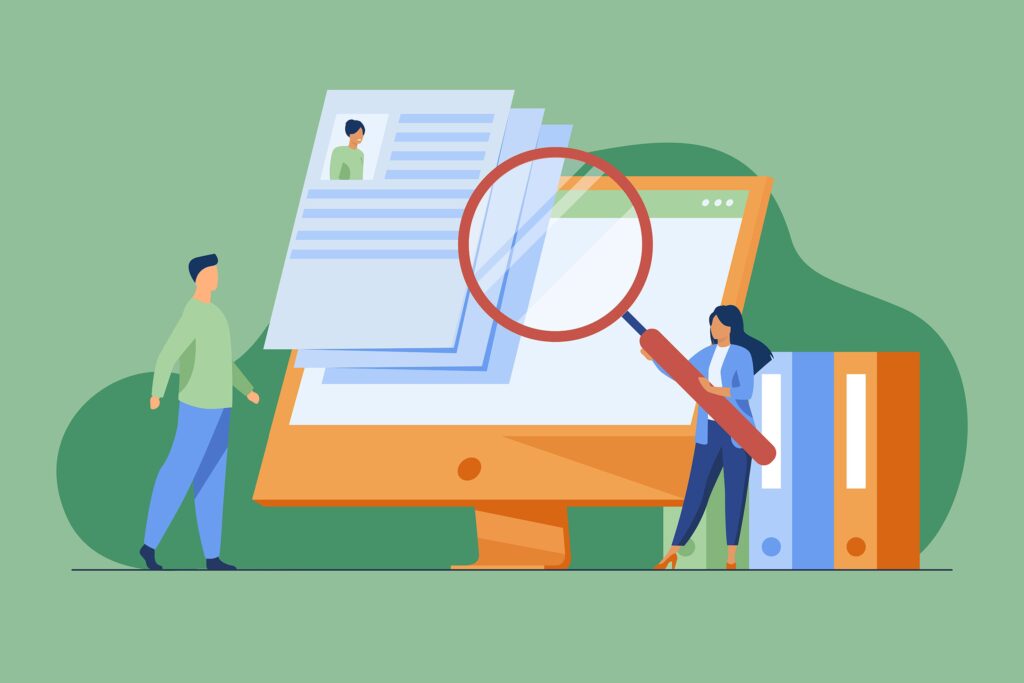
- Resumes are searchable by keyword
- Hiring managers can access files instantly
- Documents can be shared securely without email attachments
- No time is wasted tracking down physical folders
This shortens time-to-hire and improves candidate experience.
2. Centralized Hiring Records
Scanning allows HR teams to maintain a single digital repository for:
- Applications
- Interview notes
- Background checks
- Offer documentation
This eliminates scattered files across desks, inboxes, and shared drives.
3. Improved Collaboration With Hiring Managers
Digital HR files enable:
- Real-time access for authorized managers
- Faster approvals and sign-offs
- Reduced delays caused by missing paperwork
Managers no longer wait for HR to “pull a file.”
How Scanning Transforms Employee Onboarding
Onboarding is one of the most document-intensive HR processes, and one of the most time-sensitive.
1. Streamlined New-Hire Paperwork
New hires often complete:
- Tax forms
- Direct deposit authorizations
- Benefits enrollment documents
- Policy acknowledgments
- Training agreements
When these documents are scanned and indexed:
- HR can verify completeness immediately
- Payroll receives required forms faster
- Benefits enrollment delays are reduced
- Employees start productive work sooner
2. Reduced Errors and Missing Documents
Paper onboarding often leads to:
- Incomplete forms
- Misfiled paperwork
- Delays in payroll setup
Scanning ensures documents are:
- Indexed consistently
- Checked for completeness
- Stored in the correct employee file
This reduces administrative errors and follow-up work.
3. Better Support for Remote and Hybrid Employees
As remote and hybrid work becomes standard, paper onboarding becomes impractical.
Digitized HR files allow:
- Secure access from any location
- Faster onboarding regardless of geography
- Consistent experience for all employees
This is especially valuable for growing organizations.
Improving Internal Communication With Scanned HR Files
HR does not operate in isolation. Scanned documents improve communication across departments.
1. Faster Information Sharing With Payroll
Payroll depends on accurate HR documentation.
Digitized files ensure payroll teams can:
- Access tax forms quickly
- Verify employment status
- Process changes without delays
This reduces paycheck errors and employee complaints.
2. Better Visibility for Management
With proper permissions, managers can:
- Review performance documentation
- Access training certifications
- Confirm policy acknowledgments
This supports better decision-making and reduces unnecessary HR bottlenecks.
3. Clearer Communication During Employee Changes
Promotions, transfers, leaves of absence, and terminations all require documentation.
Scanned HR files ensure:
- All stakeholders see the same information
- Changes are documented consistently
- Miscommunication is reduced
Compliance and Security Benefits of Scanning HR Files
HR records contain some of the most sensitive information in an organization.
1. Stronger Data Security
Paper HR files are vulnerable to:
- Unauthorized access
- Theft
- Loss during office moves
- Accidental disclosure
Digitized HR files can be protected with:
- Role-based access controls
- Encryption
- Audit logs
- Secure backups
This significantly reduces data breach risk.
2. Improved Compliance With Employment Laws
HR departments must comply with:
- Federal and state labor laws
- I-9 retention requirements
- OSHA documentation rules
- EEOC regulations
- Wage and hour recordkeeping laws
Scanning supports compliance by:
- Making records easy to retrieve during audits
- Ensuring consistent retention
- Preventing premature destruction
3. Clear Audit Trails
Digital systems track:
- Who accessed a file
- When it was accessed
- What changes were made
This is critical during disputes, audits, or investigations.
Retention and Lifecycle Management for HR Records
Not all HR documents should be kept forever.
Typical retention requirements include:
- I-9 forms: specific federal timelines
- Payroll records: several years
- Performance reviews: defined periods
- Benefits documentation: long-term retention
Scanning HR files allows organizations to:
- Apply retention rules digitally
- Identify records eligible for destruction
- Reduce long-term storage liability
This creates a more defensible records management strategy.
Why HR Departments Choose Professional Scanning Services
Many organizations consider scanning HR files internally, but often underestimate the challenges.
Limitations of DIY HR Scanning
- Time-consuming for HR staff
- Inconsistent quality
- Security risks during handling
- Lack of chain-of-custody documentation
Advantages of Professional Scanning
Professional providers offer:
- Secure pickup and handling
- High-speed, high-quality scanning
- OCR and indexing
- Quality control
- Compliance-focused processes
This allows HR teams to focus on people, not paperwork.
How a Typical HR Scanning Project Works
- Assessment – Identify document types and compliance needs
- Secure Collection – Chain-of-custody from day one
- Preparation – Sorting and document organization
- Scanning & OCR – Searchable digital files
- Indexing – Employee name, ID, document type
- Quality Control – Accuracy checks
- Secure Delivery – Upload to HR systems or DMS
- Optional Shredding or Storage – Compliant end-of-life handling
This structured approach ensures accuracy and security.
Industries That Benefit Most From HR File Scanning
While all organizations benefit, scanning is especially impactful in:
- Healthcare
- Financial services
- Manufacturing
- Education
- Construction
- Professional services
- Government and nonprofits
Any organization with growing staff or compliance obligations gains value.
Long-Term ROI of Scanning HR Files
Organizations typically see ROI through:
- Faster hiring cycles
- Reduced onboarding delays
- Fewer payroll errors
- Lower compliance risk
- Improved employee satisfaction
- Reduced storage costs
- Increased HR productivity
For many businesses, the benefits compound year after year.
HR departments play a critical role in attracting talent, supporting employees, and protecting organizations from compliance risk. Paper-based HR files slow these efforts and introduce unnecessary friction.
By scanning HR files and centralizing them in a secure digital system, organizations can dramatically improve hiring efficiency, streamline onboarding, enhance internal communication, and strengthen data security.
Emerald Document Imaging helps businesses digitize HR records securely and compliantly, supporting modern HR workflows while protecting sensitive employee information.