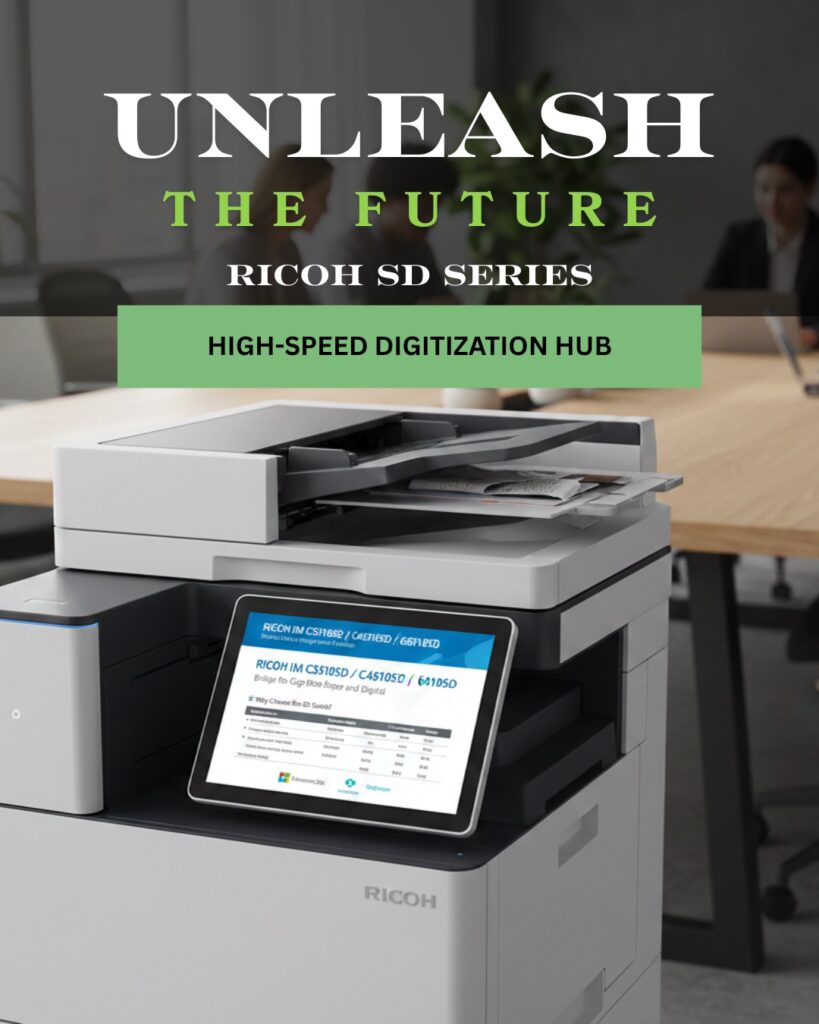
If your organization is considering a production printing press, one of the biggest decisions you’ll face is toner vs. inkjet technology. Both are capable of high-volume, professional output, but they operate differently and serve different business needs. This guide explains the key differences between toner and inkjet production presses, including cost structure, speed, media compatibility, image quality, and long-term ROI considerations.
Choosing the wrong technology can limit growth. Choosing the right one can transform your print environment.
What Is a Toner-Based Production Press?
Toner production presses use electrostatic technology to transfer dry toner powder onto paper, which is then fused using heat and pressure.
This technology evolved from traditional laser printing and is widely used in:
- Commercial print shops
- Corporate in-house print departments
- Marketing agencies
- Financial institutions
Toner presses are known for:
- Sharp text clarity
- Consistent color output
- Reliable media handling
- High image stability
They are especially strong in mixed-media and specialty print environments.
What Is an Inkjet Production Press?
Inkjet production presses spray liquid ink droplets directly onto paper at extremely high speeds.
Modern high-speed inkjet systems are used in:
- Transactional mail printing
- Direct mail production
- Publishing
- High-volume statement printing
- Large-scale marketing runs
Inkjet presses are known for:
- Exceptional speed
- Lower cost per page at very high volumes
- Strong performance in long-run environments
Inkjet technology has advanced significantly in recent years, especially in quality and substrate compatibility.
Core Technology Differences
Toner Production Press
- Uses dry toner powder
- Heat-fused to paper
- Static image formation
- Highly precise image control
Inkjet Production Press
- Sprays liquid ink
- No heat-based fusing
- Continuous ink delivery
- Extremely high throughput speeds
The underlying technology affects output speed, media flexibility, and long-term cost.
Speed Comparison
Inkjet presses generally outperform toner presses in raw speed.
- High-speed inkjet systems can exceed hundreds of feet per minute in roll-fed environments.
- Toner presses are typically optimized for sheet-fed, high-quality output at moderate-to-high speeds.
If your business runs extremely long print jobs, such as transactional statements, inkjet often wins on throughput.
For shorter runs, mixed jobs, and diverse media, toner presses provide more versatility.
Image Quality and Color Consistency
Toner presses are often preferred for:
- Fine text detail
- Crisp line work
- Consistent color reproduction
- High-end marketing materials
Inkjet presses have improved dramatically, but toner may still provide:
- Better control over coated stocks
- More stable color output across varied substrates
If brand-critical color accuracy is central to your work, toner technology often provides stronger precision.
Media Compatibility
Toner presses typically handle:
- Heavy-weight stocks
- Coated papers
- Specialty media
- Textured substrates
Inkjet presses often perform best on:
- Uncoated paper
- Treated stocks
- Roll-fed media
Some advanced inkjet systems support coated media, but may require special paper treatment or primers.
If your organization frequently prints brochures, catalogs, or premium marketing materials, toner systems often offer broader flexibility.
Cost Per Page
Cost per page depends heavily on volume.
Inkjet Advantages
At extremely high volumes, inkjet systems often offer:
- Lower ink cost per page
- Greater efficiency in long, uninterrupted runs
- Reduced consumable waste
This makes inkjet ideal for:
- Statement printing
- Direct mail campaigns
- High-volume publishing
Toner Advantages
Toner presses may offer:
- More predictable consumable costs
- Lower setup waste
- Strong performance in short-to-medium runs
If your jobs vary in size and format, toner may provide more balanced economics.
Maintenance and Downtime
Both systems require maintenance, but differences exist.
Inkjet systems may require:
- Regular nozzle maintenance
- Printhead monitoring
- Strict environmental controls
Toner presses may require:
- Periodic component replacement
- Fuser maintenance
- Drum replacements
Your internal staffing and technical expertise may influence which system fits better operationally.
Inline Finishing Capabilities
Many toner production presses offer robust inline finishing options, such as:
- Booklet making
- Folding
- Trimming
- Multi-position stapling
- Hole punching
Inkjet presses, especially roll-fed systems, often require:
- Separate finishing equipment
- Offline post-processing
If finishing automation is central to your workflow, evaluate how each system integrates with finishing solutions.
Variable Data Printing (VDP)
Both toner and inkjet systems support variable data printing.
However:
- Inkjet systems excel in extremely high-volume VDP environments
- Toner presses perform exceptionally well in mid-to-high volume personalized campaigns
If your business sends millions of personalized mail pieces annually, inkjet may provide greater efficiency.
If you focus on shorter-run targeted campaigns, toner may offer better versatility.
Space and Infrastructure Requirements
Inkjet production systems, particularly roll-fed models, often require:
- Larger footprints
- Additional drying units
- Climate-controlled environments
- Enhanced electrical capacity
Toner presses typically require less infrastructure modification, making them easier to integrate into existing print rooms.
Infrastructure readiness should be part of your decision.
Growth and Scalability Considerations
If your print volume is projected to:
- Increase dramatically
- Focus heavily on long-run production
- Centralize multi-location print
Inkjet systems may offer stronger scalability.
If your growth involves:
- Expanding marketing capabilities
- Producing diverse materials
- Handling mixed job types
Toner presses often provide more flexibility.
Your long-term print strategy should guide your choice.
Which Technology Is Right for You?
You may benefit from toner if:
- You print high-quality marketing materials
- You need media flexibility
- Your job sizes vary
- Inline finishing matters
You may benefit from inkjet if:
- You produce extremely high volumes
- Long runs dominate your workflow
- Cost per page at scale is critical
- Transactional printing is primary
There is no universal “better” option—only better alignment with your operational goals.
Toner vs. inkjet production presses differ in speed, cost structure, media handling, and infrastructure requirements. The right choice depends on your volume profile, finishing needs, growth projections, and budget strategy.
Production printing is a long-term investment. Evaluating the technology carefully ensures you select a system that supports both current demand and future expansion.
Contact us to compare toner and inkjet production presses and determine which solution aligns with your business objectives.