This guide examines 2024 healthcare data breach statistics to reveal how paper records continue to expose organizations to security and compliance risks.
In a world where ransomware, phishing, and digital hacking dominate headlines, it’s easy to believe that data security is purely a digital issue. But 2024’s healthcare breach statistics tell a different (and startling) story.
Despite rapid digital transformation, paper records are still a major source of data breaches. And the consequences can be just as severe as a cyberattack.
If your business still relies on paper documents for medical records, HR files, legal documentation, or client data, now is the time to rethink your risk exposure.
Shocking Breach Statistics: Paper Still a Problem in 2024
According to the HIPAA Journal’s 2024 data breach statistics:
- There were 725 healthcare data breaches reported to the OCR in 2023 alone.
- While many breaches involved digital attacks like phishing or ransomware, 21 breaches involved physical paper or film records.
- These “analog” breaches affected over 250,000 individuals.
That means hundreds of thousands of patients had their data compromised not by a hacker, but by a lost file, stolen folder, or improperly discarded paper document.
According to historical data from the National Library of Medicine:
- Roughly 4.4% of healthcare breaches involving individuals originate from paper records.
- 22.4% of breaches at covered entities (like hospitals and clinics) involved paper.
- 21.6% of breaches at business associates (such as billing companies or storage vendors) also stemmed from paper sources.
These aren’t outdated figures, they reflect systemic, ongoing vulnerabilities.
In just the first half of 2024, the HIPAA Journal reported:
- 13 reported breaches tied to paper record loss, theft, or improper disposal.
- These affected:
- 66,396 individuals due to loss or theft (avg. ~5,107 per incident)
- 2,309 individuals due to improper disposal (avg. ~770 per incident)
- 66,396 individuals due to loss or theft (avg. ~5,107 per incident)
Even more concerning, real-world cases show how damaging paper-based breaches can be:
- 149,940 paper records were stolen from a storage facility in one high-profile case.
- Another incident exposed 7,500 patient records when documents were improperly discarded in a dumpster.
And while major breaches make headlines, small and mid-sized organizations are especially vulnerable:
- In 2022, fewer than 1% of large data breaches were due to paper loss or mishandling.
- But for smaller breaches (affecting fewer than 500 individuals), 93% involved unauthorized access or disclosure, most commonly from paper records.
Takeaway: The humble filing cabinet could be your company’s biggest security blind spot.
How Do Paper-Based Breaches Happen?
Unlike digital systems that rely on encryption, passwords, and user permissions, paper security often depends on physical barriers and human behavior.
Common causes of paper record breaches include:
- Improper disposal – Records thrown in the trash instead of securely shredded
- Loss or theft – Files left in cars, at front desks, or shipped without tracking
- Unsecured office storage – Open cabinets or boxes in shared areas
- Lack of audit trail – No visibility into who accessed or removed files
One misplaced file or poorly discarded folder can violate HIPAA, damage your reputation, and cost thousands, or even millions.
Digitization: Your First Line of Defense
Going paperless is more than a convenience, it’s a data security upgrade.
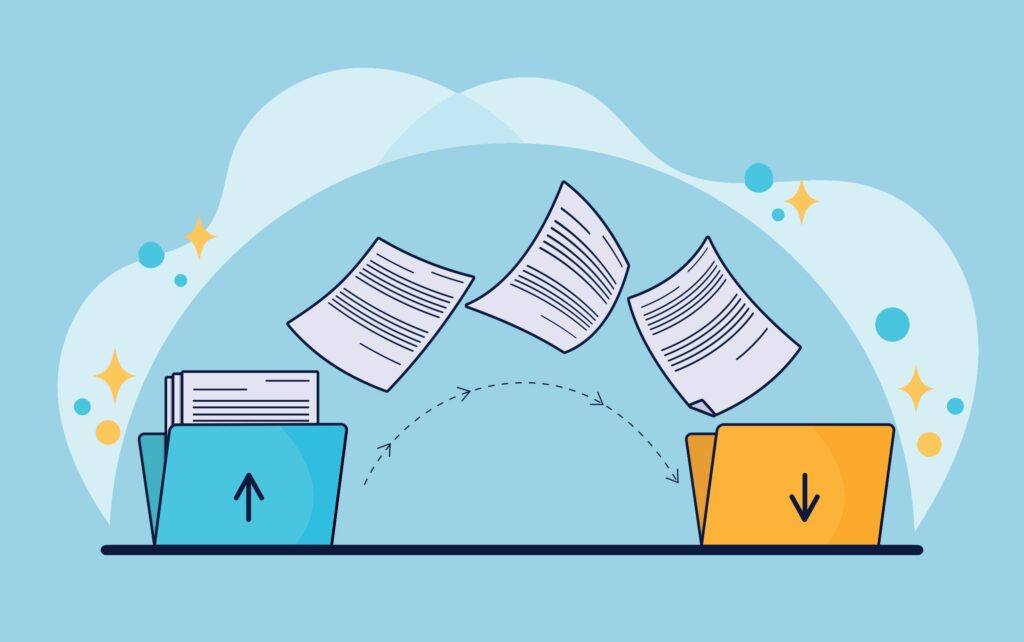
When you scan and digitize your records, you:
- Control access with secure logins and user permissions
- Track usage with audit trails and version history
- Encrypt data at rest and in transit
- Recover data through backups and disaster recovery
- Improve compliance with HIPAA, GDPR, and other regulatory frameworks
Digitization also enhances productivity by making files searchable, shareable, and integrated into your workflow. No more digging through file cabinets or missing documents.
Offsite Storage: When You Still Need the Paper
Some records must be retained in physical form due to legal or operational requirements. But keeping them in your office (or basement) is a risk.
Offsite document storage offers:
- High-security environments with 24/7 surveillance and climate control
- Professional indexing and inventory so you always know what you have
- Retention tracking to ensure records are kept only as long as needed
- Chain-of-custody documentation for audits and litigation readiness
Rather than leave sensitive records vulnerable to fire, theft, or unauthorized access, offload them to a professional facility with the infrastructure to keep them protected.
Why a Records Management System Matters
Digital and physical records need a structured plan and platform to manage them safely and efficiently. That’s where records management systems (RMS) come in.
A robust RMS can help you:
- Apply retention schedules automatically
- Ensure regulatory compliance
- Prevent unauthorized access
- Track record activity across departments
- Coordinate digitization and destruction timelines
Without a centralized system, you risk keeping records too long, disposing of them improperly, or exposing data to unnecessary threats.
What a Paper-Based Breach Can Cost You
Data breaches don’t just result in fines, they erode trust, delay operations, and increase liability.
- In 2023, the average healthcare data breach cost $10.93 million, the highest of any industry (IBM).
- HIPAA fines can range from $100 to $50,000 per record, depending on the nature of the violation.
- State-level penalties and lawsuits can further drive up costs.
And unlike digital breaches, paper-based incidents are almost always the result of avoidable human error or lack of policy enforcement.
How Emerald Document Imaging Helps You Stay Protected
At Emerald Document Imaging, we help New York and Long Island businesses eliminate paper risks through secure, compliant, and cost-effective services:
✔️ Document Scanning
Convert paper to digital with high-resolution scanning, OCR indexing, and secure delivery.
✔️ Offsite Records Storage
Protect hard copies in secure, climate-controlled, access-monitored facilities.
✔️ Document Management Systems (DMS)
Organize, search, share, and protect digital files with customizable workflows and access control.
✔️ Secure Shredding
When it’s time to dispose, our shredding service ensures records are destroyed in compliance with HIPAA and state laws.
Whether you’re a medical office, law firm, or enterprise dealing with legacy files, we’ll help you build a custom solution to reduce risk and boost efficiency.
Don’t Wait Until It’s Too Late
The HIPAA Journal’s 2024 statistics make one thing clear: paper records are still a major data security risk, and one of the easiest to fix.
If your organization still stores, manages, or disposes of sensitive documents manually, the time to act is now.
Let Emerald Document Imaging help you digitize, store, manage, and destroy records the right way.
Contact us today for scanning and storage solutions that will keep your data safe →