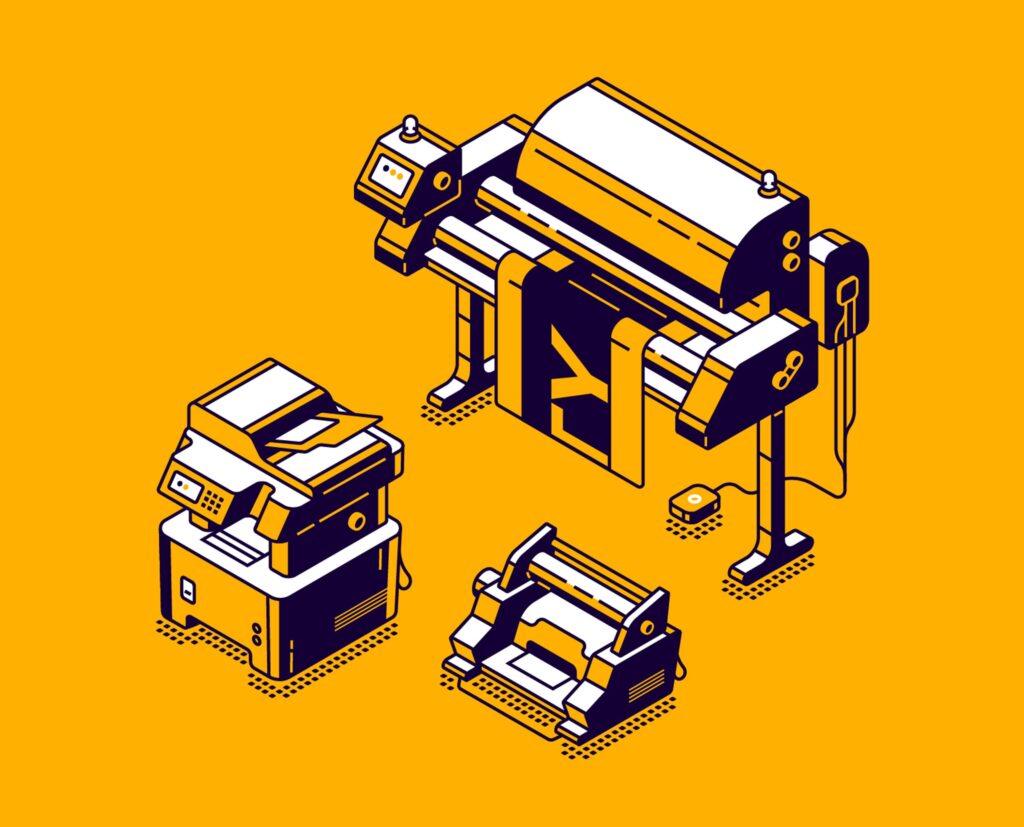
If you work in architecture, engineering, construction, design, or marketing, you’ve probably heard the terms plotter and wide format printer used interchangeably. Some vendors use them as synonyms. Others insist they are completely different machines.
So which is correct?
The short answer: They are not exactly the same, but in modern offices, the difference is mostly historical.
Let’s break down what each device is, how they evolved, and how to choose the right solution for your business.
What Is a Plotter?
A plotter is a large-format device originally designed to produce precise, vector-based line drawings. Plotters were commonly used for:
- Architectural blueprints
- Engineering schematics
- CAD drawings
- Technical diagrams
- Survey maps
Traditional plotters worked very differently from standard printers.
How Early Plotters Worked
Older plotters used physical pens that moved across paper to draw lines. Instead of spraying ink or toner across a page like a typical printer, they:
- Read vector coordinates from CAD software
- Moved a pen mechanically across the surface
- Drew lines with extreme precision
This made them ideal for technical drawings requiring clean, accurate lines and measurements.
However, they were:
- Slow
- Limited to line work
- Not suitable for complex color graphics
As printing technology evolved, plotters changed dramatically.
What Is a Wide Format Printer?
A wide format printer (also called a large-format printer) is designed to print on paper sizes larger than standard office sheets (8.5″ x 11″ or 11″ x 17″).
Typical wide format sizes include:
- 24-inch rolls
- 36-inch rolls
- 42-inch rolls
- And larger
Wide format printers are used for:
- Blueprints
- Construction drawings
- Posters
- Banners
- Signage
- Retail graphics
- Wall coverings
- Marketing displays
Unlike early pen plotters, modern wide format printers use:
- Inkjet technology
- Toner-based systems
- High-resolution image processing
They can print both line drawings and full-color images.
So… Are Plotters and Wide Format Printers the Same?
In modern usage, yes—most “plotters” today are technically wide format inkjet printers.
The term “plotter” has largely stuck in industries like:
- Architecture
- Engineering
- Construction
But the machines themselves are typically advanced inkjet wide format printers capable of:
- Technical line drawings
- High-resolution color prints
- Photos
- Marketing graphics
In other words:
All modern plotters are wide format printers.
But not all wide format printers are used as technical plotters.
The difference today is more about application than hardware.
Key Differences: Plotter vs. Wide Format Printer
Let’s compare them more clearly.
1. Intended Use
Plotter (historical focus):
- Precision line drawings
- CAD files
- Engineering and architecture
Wide Format Printer (broader focus):
- Blueprints
- Posters
- Signage
- Retail graphics
- Marketing materials
2. Printing Technology
Traditional Plotter:
- Mechanical pen system
- Vector-only output
Modern Wide Format Printer:
- Inkjet spray technology
- Raster + vector support
- High-resolution image reproduction
Today’s “plotters” are essentially high-precision inkjet printers optimized for technical output.
3. Speed and Efficiency
Older plotters were slower because they physically drew lines.
Modern wide format printers:
- Print entire sections at once
- Support high-speed draft modes
- Offer production-level throughput
For construction teams that need fast turnaround on plan revisions, this is a major advantage.
4. Color Capability
Traditional plotters were limited in color options.
Modern wide format printers can:
- Print full-color renderings
- Handle detailed gradients
- Produce marketing-ready graphics
This makes them more versatile across departments.
Why the Terminology Still Causes Confusion
Many industries still refer to their machine as a “plotter” because:
- The word has been used for decades
- CAD workflows historically required plotters
- Construction teams are accustomed to the term
But if you purchase a new “plotter” today, you’re almost certainly buying a wide format inkjet printer.
Manufacturers often market them differently depending on the audience.
For example:
- Engineering-focused models emphasize line accuracy
- Graphics-focused models emphasize color vibrancy
Internally, however, the technology is very similar.
Which One Does Your Business Actually Need?
Instead of focusing on terminology, focus on workflow.
Ask yourself:
1. Are You Printing Primarily Line Drawings?
If you:
- Run CAD software daily
- Print construction sets
- Need precise scaling
- Require consistent line weights
You need a technical wide format printer (often marketed as a plotter).
2. Are You Printing Marketing Graphics?
If you:
- Produce posters or retail signage
- Print presentation boards
- Create trade show graphics
You need a graphics-focused wide format printer with enhanced color capabilities.
3. Do You Need Both?
Many modern devices can handle both technical drawings and graphics printing, making them ideal for:
- Architecture firms with in-house marketing
- Construction companies creating proposal boards
- Universities and facilities departments
A properly configured wide format printer can serve multiple departments efficiently.
What to Consider Before Investing
Whether you call it a plotter or wide format printer, evaluate:
Print Volume
How many square feet per month will you print?
Media Size
24″, 36″, or 42″ rolls?
Ink Type
- Dye-based
- Pigment-based
- UV
Speed Requirements
Are you printing occasional drawings or full construction sets daily?
Security
Does the device connect to your network securely?
Does it store job data internally?
Integration
Does it integrate with:
- Your document management system
- Cloud storage
- Project management software
The Business Case for Modern Wide Format Printing
Bringing wide format printing in-house offers:
- Faster revision turnaround
- Reduced outsourcing costs
- Better quality control
- Increased confidentiality for sensitive plans
For construction firms, this can mean fewer delays and faster project approvals.
For marketing teams, it can mean tighter brand control and faster campaign launches.
Plotters and wide format printers are not historically the same, but in today’s market, the distinction is mostly semantic.
If you’re buying new equipment:
You are buying a wide format printer.
It may be labeled a “plotter” if it’s optimized for CAD and technical drawings, but the underlying technology is modern large-format inkjet printing.
The real decision isn’t about the name.
It’s about matching the machine to your workflow, volume, and business goals.
If you’re evaluating whether a wide format printer makes sense for your architecture firm, engineering team, or marketing department, Emerald Document Imaging can help you assess volume, space, and ROI to determine the right solution for your business.