As companies grow, they rarely stay in one place. New offices open. Departments spread across cities or states. Remote and hybrid workforces become permanent. While expansion creates opportunity, it also introduces complexity, especially when critical business documents remain tied to paper.
For multi-location organizations, paper records quickly become a bottleneck. Files stored in one office are needed in another. Duplicate copies multiply. Version control breaks down. Compliance risks increase. Productivity suffers.
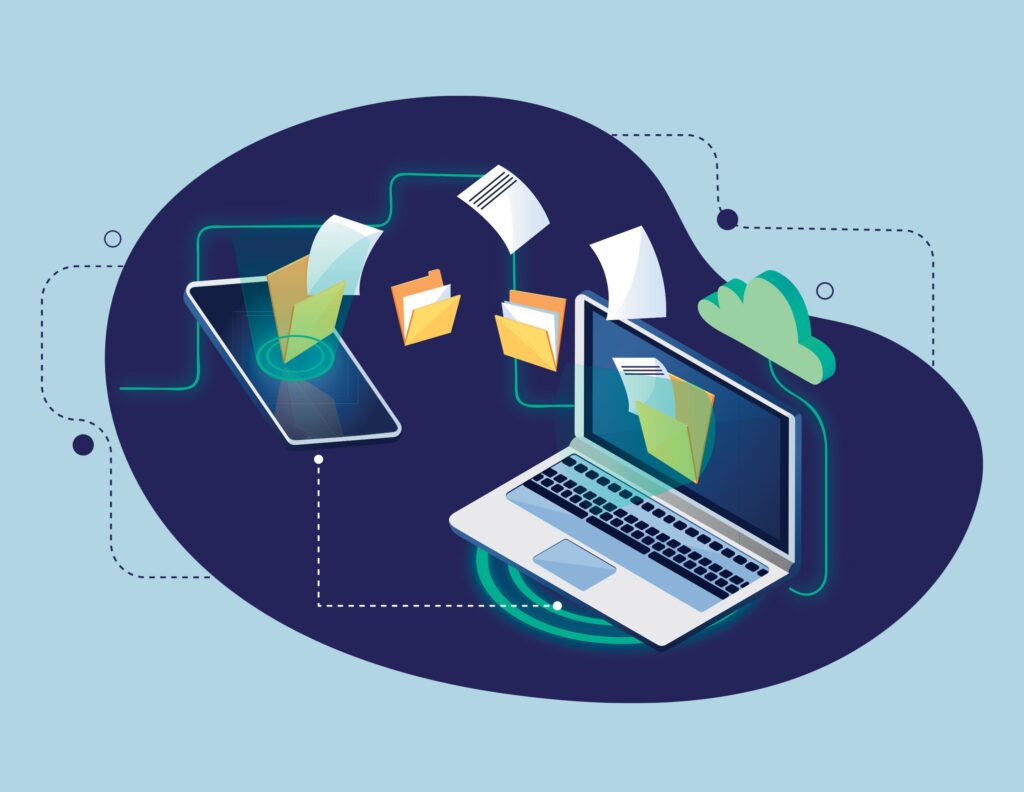
Professional document scanning solves these challenges by transforming paper records into secure, searchable digital assets that can be accessed anywhere.
This article explains how document scanning supports multi-location operations, improves efficiency, strengthens compliance, and enables scalable growth without operational friction.
The Document Challenges of Multi-Location Businesses
As organizations expand, document problems tend to scale faster than revenue.
Common challenges include:
- Files stored in different offices
- Inconsistent filing systems by location
- Duplicate or outdated documents
- Delays accessing records from another office
- Increased courier and shipping costs
- Security gaps between locations
- Difficulty enforcing retention policies
- Limited visibility into where records live
Paper-based systems were never designed for distributed operations.
Why Paper Records Don’t Scale Across Locations
Paper works, until it doesn’t.
For growing companies, paper records create structural limitations:
- Physical dependency: Documents must be where people are
- Slow access: Shipping or scanning on demand causes delays
- Redundant storage: Each location keeps its own copy
- Inconsistent processes: Every office does things differently
- Compliance risk: Harder to enforce uniform controls
Document scanning removes geography from the equation.
What Document Scanning Does for Distributed Organizations
Document scanning converts paper files into digital documents that are:
- Searchable
- Centralized
- Secure
- Shareable (with controls)
- Scalable across locations
Once digitized, documents are no longer tied to a single office, or even a single system.
1. Centralized Access Across All Locations
One of the biggest benefits of document scanning is centralization.
Digitized documents can be stored in:
- A document management system (DMS)
- A secure cloud repository
- An integrated ERP or line-of-business system
This allows:
- All offices to access the same files
- No dependency on physical storage
- One authoritative version of every document
Employees no longer waste time requesting files from another location.
2. Faster Collaboration Between Offices
When documents are scanned and indexed:
- Teams collaborate in real time
- Approvals move faster
- Cross-location workflows become seamless
- Bottlenecks caused by paper disappear
For example:
- Finance can access invoices from every branch instantly
- HR can manage employee files centrally
- Legal can review contracts without waiting on shipments
This dramatically improves operational speed.
3. Improved Version Control Across Locations
Paper records almost always lead to version confusion in multi-location environments.
Scanning supports:
- Single source of truth
- Clear version history
- Controlled updates
- Elimination of outdated copies
This is especially critical for:
- Contracts
- Policies and procedures
- Compliance documentation
- Technical and operational manuals
Using the wrong version can be costly.
4. Consistent Records Management Practices
As companies grow, inconsistency becomes a risk.
Document scanning allows organizations to:
- Standardize indexing across all locations
- Apply uniform naming conventions
- Enforce retention schedules centrally
- Control access based on role, not location
This consistency is nearly impossible with paper systems.
5. Better Compliance Across Jurisdictions
Multi-location businesses often operate across:
- Cities
- Counties
- States
Each with different regulatory requirements.
Scanning supports compliance by:
- Making records easier to retrieve during audits
- Applying retention rules consistently
- Preventing premature destruction
- Reducing unauthorized access
This is critical for regulated industries like healthcare, finance, legal, and construction.
6. Reduced Shipping, Storage, and Handling Costs
Paper-based multi-location operations often rely on:
- Couriers
- Overnight shipping
- Duplicate storage rooms
- Offsite box retrievals
Digitizing records reduces or eliminates these costs.
Once scanned:
- Files are accessed digitally
- Shipping becomes unnecessary
- Physical storage needs shrink
Cost savings scale as the company grows.
7. Stronger Security Across Locations
Paper records are difficult to secure consistently across offices.
Digitized documents allow:
- Role-based access controls
- Encryption
- Audit logs
- Access monitoring
This ensures sensitive information is protected regardless of where employees are located.
Security becomes policy-driven, not location-dependent.
8. Support for Remote and Hybrid Teams
Many multi-location companies also support remote or hybrid work.
Scanning enables:
- Secure access from anywhere
- No need to visit a specific office
- Faster onboarding for remote employees
- Business continuity during disruptions
Paper records undermine remote work. Digital records enable it.
9. Faster Office Openings, Moves, and Closures
Growing companies frequently:
- Open new locations
- Relocate offices
- Consolidate branches
Document scanning simplifies transitions by:
- Eliminating the need to move file rooms
- Reducing downtime during relocations
- Preventing lost or damaged records
This flexibility supports agile growth.
Industries That Benefit Most From Multi-Location Scanning
Healthcare
Clinics, imaging centers, and specialty practices share records across locations while maintaining HIPAA compliance.
Financial Services
Banks, accounting firms, and advisory firms centralize records for compliance and audit readiness.
Construction & Engineering
Project documents are accessed by offices, job sites, and field teams.
Legal
Law firms manage case files across multiple offices without duplicating records.
Retail & Franchise Operations
Corporate teams gain visibility into records from every location.
Manufacturing
Quality, compliance, and operational documents are shared across plants and offices.
How a Multi-Location Scanning Project Works
A structured approach ensures minimal disruption.
- Assessment – Identify document types and locations
- Standardization – Define indexing and naming conventions
- Secure Collection – Chain-of-custody from each site
- Scanning & OCR – Searchable digital files
- Quality Control – Accuracy verification
- Central Delivery – Upload to shared systems
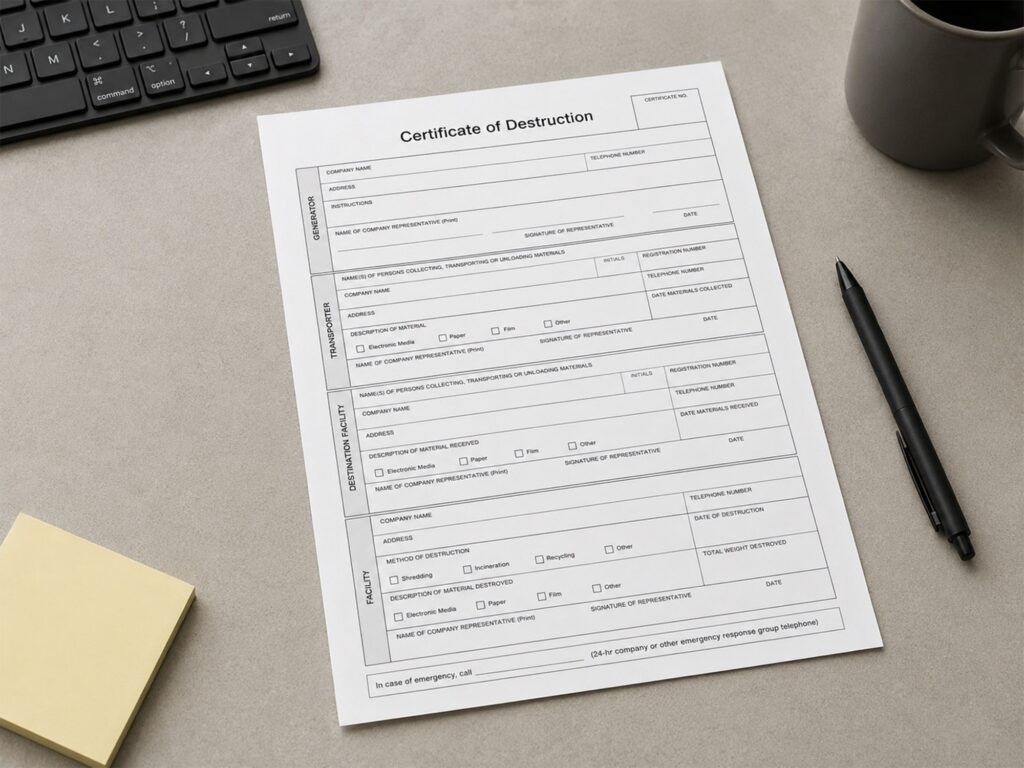
- Optional Storage or Destruction – Compliant handling of originals
This approach creates consistency across all locations.
Paper-to-Digital Doesn’t Have to Happen All at Once
Most growing companies take a phased approach:
- Scan inactive and archived records first
- Digitize high-use documents next
- Implement digital-first workflows going forward
- Gradually reduce paper creation
This avoids disruption while delivering immediate benefits.
Common Mistakes Multi-Location Companies Should Avoid
- Letting each location scan independently
- Inconsistent indexing and naming
- Ignoring retention requirements
- Using unsecured DIY scanning
- Failing to plan for long-term governance
Professional scanning ensures scalability and compliance.
Why Professional Scanning Matters for Distributed Organizations
Professional providers offer:
- Secure handling across locations
- Consistent standards
- Compliance expertise
- Scalable workflows
- Quality assurance
This is especially important when multiple offices are involved.
Long-Term ROI of Scanning for Multi-Location Companies
Organizations typically see ROI through:
- Faster access to information
- Reduced administrative labor
- Lower storage and shipping costs
- Fewer compliance issues
- Improved productivity
- Better collaboration
These benefits compound as the organization grows.
Growth shouldn’t be limited by paperwork. For multi-location companies, document scanning removes the physical barriers that slow operations, create risk, and frustrate teams.
By digitizing records and centralizing access, growing organizations gain the flexibility, consistency, and control needed to scale confidently, without disrupting daily operations.
Emerald Document Imaging helps growing companies streamline multi-location operations through secure document scanning, centralized access, compliance-focused workflows, and scalable records management solutions.
Get started with the right document scanning solution for your business →