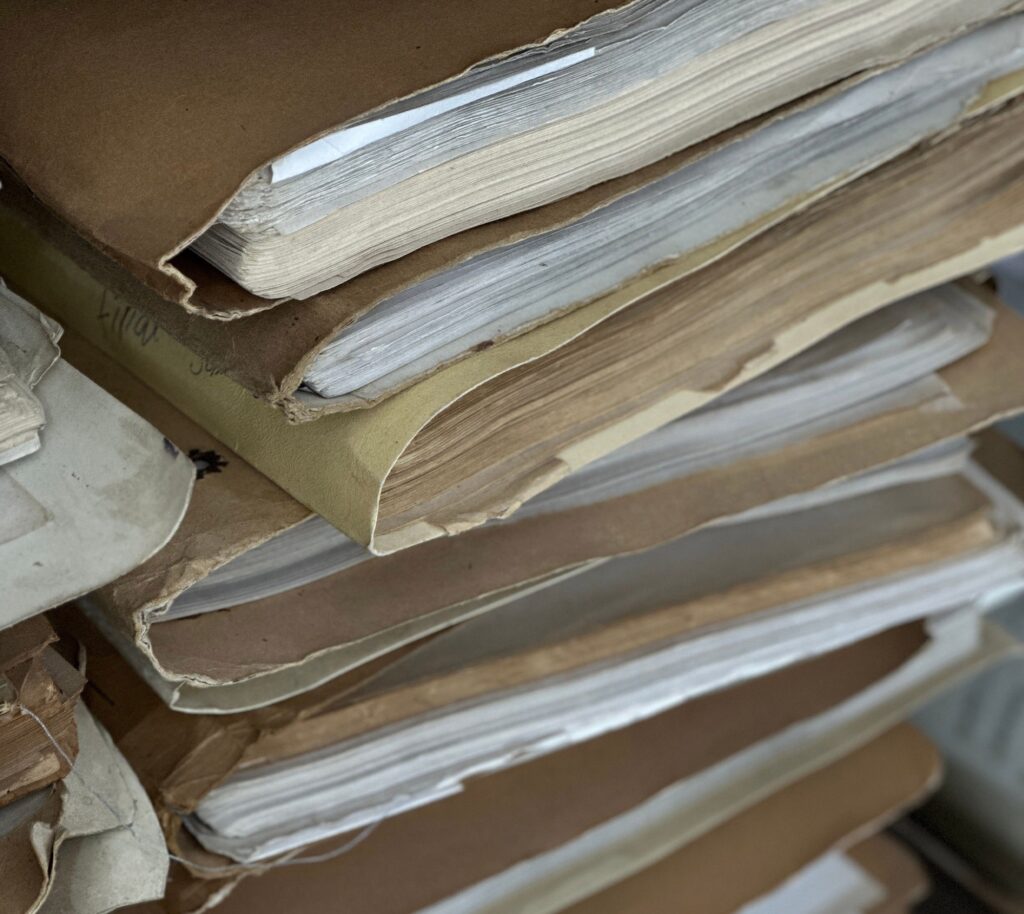
For many businesses, document storage happens wherever there’s space. Filing cabinets get pushed into basements. Banker’s boxes stack up in supply closets. Old records are tucked away in unused offices or back rooms with the assumption that “we’ll deal with them later.”
But storing business records in basements, closets, and back rooms is far from harmless. What feels like a convenient short-term solution often creates serious risks related to security, compliance, data loss, and operational efficiency, risks that usually surface at the worst possible time: during audits, lawsuits, office moves, or disasters.
This article explains why informal, in-house storage locations are one of the most common records management mistakes businesses make, the specific risks involved, and safer alternatives that protect both your documents and your organization.
Why Businesses Resort to Informal Storage Spaces
Basements, closets, and back rooms often become storage areas because:
- Office space is limited or expensive
- Records accumulate faster than expected
- There is no formal records management plan
- Employees don’t know what can be destroyed
- Storage feels like a “temporary” solution
Unfortunately, “temporary” storage often becomes permanent and unmanaged.
Risk #1: Water Damage and Flooding
Basements are especially vulnerable to water-related damage.
Common causes include:
- Heavy rain or flooding
- Burst pipes
- HVAC condensation
- Sump pump failures
- Sewer backups
Paper records exposed to moisture can:
- Become unreadable
- Grow mold
- Stick together or disintegrate
- Require costly restoration or total loss
Once water damage occurs, recovery is rarely complete.
Risk #2: Fire Hazards and Code Violations
Paper is highly flammable. Storing large volumes of records in non-designated areas increases fire risk significantly.
Problems include:
- Overloaded electrical outlets near paper storage
- Blocked exits or sprinkler systems
- Non-fire-rated rooms used as storage
- Lack of fire suppression systems
Fire inspectors and building code officials may issue citations or require immediate removal if storage areas violate safety codes.
Risk #3: Mold, Humidity, and Environmental Damage
Closets and back rooms are rarely climate-controlled.
Poor environmental conditions can lead to:
- Mold growth
- Brittleness and paper degradation
- Ink fading
- Damage to photographs, plans, or medical records
Mold doesn’t just damage documents; it can create health risks for employees and force costly remediation.
Risk #4: Unauthorized Access and Security Breaches
Informal storage spaces are often:
- Unlocked
- Shared by multiple departments
- Accessible to cleaning crews or contractors
- Poorly monitored
This creates a major security risk, especially for records containing:
- Personally identifiable information (PII)
- Protected Health Information (PHI)
- Financial data
- Employee records
- Client or legal files
Unauthorized access to paper records can result in data breaches just as serious as digital ones.
Risk #5: Compliance Violations
Many industries are required by law to protect records from unauthorized access, damage, and loss.
Storing files in basements or closets can violate requirements under:
- HIPAA
- FINRA / SEC
- GLBA
- FERPA
- State privacy laws
- Employment and labor regulations
During audits or investigations, regulators often look at how records are stored, not just whether they exist.
Improper storage can result in fines even if no breach has occurred.
Risk #6: No Chain of Custody or Audit Trail
When records are stored informally:
- There’s no tracking of who accessed them
- Files can be removed without documentation
- Boxes may be misplaced or lost
If a document is needed for:
- Litigation
- Audits
- Insurance claims
- Regulatory inquiries
You may be unable to prove document integrity or authenticity.
Risk #7: Lost Productivity and Inefficiency
Searching through closets and back rooms wastes time.
Common issues include:
- Misfiled documents
- Boxes stacked without labels
- No inventory of stored records
- Employees searching for hours
This inefficiency increases labor costs and frustrates staff, especially when urgent documents are needed quickly.
Risk #8: Increased Liability During Office Moves or Renovations
During office relocations or renovations, informally stored records are at high risk of:
- Being discarded accidentally
- Being damaged during transport
- Being left behind
- Losing chain-of-custody documentation
Many businesses only discover missing or damaged records after a move is complete.
Risk #9: Over-Retention and Legal Exposure
When records are stored “out of sight,” they’re often kept far longer than required.
Over-retention can:
- Increase legal discovery exposure
- Raise data breach risk
- Inflate storage and management costs
Keeping records longer than legally required is not safer; it often increases liability.
Risk #10: No Disaster Recovery Plan
Basements and closets are rarely included in disaster recovery planning.
If a disaster occurs:
- There may be no backups
- Records may be permanently lost
- Business continuity may be disrupted
Paper stored improperly is one of the most fragile assets a business has.
Industries Most Affected by Improper Storage
While all businesses face risk, some industries are particularly vulnerable.
Healthcare
Patient records stored improperly can lead to HIPAA violations and patient complaints.
Legal
Attorney-client privilege can be compromised by unsecured storage.
Financial Services
Improper storage violates regulatory expectations for safeguarding customer data.
Human Resources
Employee files contain highly sensitive personal and financial information.
Real Estate and Property Management
Tenant records, applications, and financial documents are often stored informally.
Construction and Engineering
Plans and project documentation are vulnerable to environmental damage.
Why “We’ve Always Done It This Way” Is Risky
Many organizations store records informally because:
- Nothing bad has happened yet
- Records are rarely accessed
- There’s no immediate enforcement
But compliance and risk management are not based on luck. The absence of an incident today does not reduce exposure tomorrow.
Safer Alternatives to Informal Storage
1. Secure Offsite Records Storage
Professional offsite storage provides:
- Climate-controlled environments
- 24/7 monitored security
- Chain-of-custody tracking
- Indexed inventory systems
- Fast retrieval or scan-on-demand
This is often more affordable than using office space.
2. Document Scanning and Digitization
Digitizing records:
- Reduces paper volume
- Improves access
- Supports remote work
- Enables secure backups
Scanning can be phased to minimize disruption.
3. Retention-Based Storage and Destruction
Applying retention schedules ensures:
- Records are kept only as long as required
- Destruction is compliant and documented
- Long-term liability is reduced
4. Medical Records Custodianship (for Healthcare)
Custodians manage storage, access, and retention for closed or transitioning practices.
How to Transition Away From Unsafe Storage
A safe transition typically includes:
- Inventorying existing records
- Identifying retention requirements
- Removing records from unsafe locations
- Transferring files securely
- Implementing offsite storage or scanning
- Scheduling compliant destruction
Professional records management providers can manage this process end to end.
The True Cost of Improper Storage
Improper storage may seem inexpensive, but the real costs include:
- Regulatory fines
- Lawsuits
- Lost documents
- Breach remediation
- Business disruption
- Reputational damage
These costs far exceed the price of secure storage solutions.
Basements, closets, and back rooms were never designed to protect business records, and using them as storage spaces exposes organizations to unnecessary risk. From environmental damage and security breaches to compliance violations and lost productivity, informal storage is one of the most preventable records management problems businesses face.
By moving records into secure offsite storage or digitizing them properly, organizations can protect sensitive information, improve efficiency, and reduce long-term liability.
Emerald Document Imaging helps businesses eliminate unsafe storage practices through secure offsite records storage, document scanning, retention management, and compliant destruction, turning document storage from a liability into a controlled, defensible system.