A shredding program that covers headquarters but not branch offices is not a compliant shredding program. It is a program with gaps, and those gaps represent exactly the kind of uncontrolled document disposal that data protection regulations require organizations to prevent. Sensitive business documents are generated wherever employees work. The destruction infrastructure must be there too.
Setting up locked shredding consoles across multiple office locations is more operationally complex than deploying a program at a single site, but the complexity is manageable with the right planning sequence. The challenge is not technical. It is logistical: matching the right console types and quantities to each location’s document volume, selecting a vendor with the service coverage to reach all sites, coordinating delivery and placement, and establishing the ongoing management structure that keeps the program functioning consistently across every address.
This article walks through the full process, from initial location assessment through ongoing program management, with specific attention to the points where multi-location programs most commonly go wrong.
Start With a Location-by-Location Assessment
No two office locations generate the same volume or type of sensitive documents, and a one-size-fits-all approach to console deployment produces either waste (too many consoles at low-volume sites) or overflow (too few at high-volume ones). The foundation of a well-designed multi-location program is a distinct assessment of each office before any consoles are ordered.
For each location, the assessment should address:
- How many employees work at this location, and how many of those roles regularly handle sensitive documents?
- What types of sensitive documents are generated at this location? A customer-facing sales office generates different documents than a back-office accounting function.
- Where are documents handled? At individual workstations, in conference rooms, at shared printers, at reception, in break rooms where mail is opened?
- Are there regulated document types at this location, such as protected health information, customer financial information, or student records, that create specific compliance requirements?
- What is the estimated volume of documents per week? High-volume locations need more frequent service; low-volume locations may function well with quarterly scheduled pickups.
- Are there any physical constraints that affect where a console can be placed, such as narrow hallways, shared lobby areas, or ADA accessibility requirements?
The output of this assessment is a location profile that drives every subsequent decision: how many consoles, which types, where they are placed, and how often they are serviced.
Choosing the Right Console Types and Quantities
Shredding consoles are available in several formats, each suited to different physical environments and usage patterns.
Standard consoles are the most common format, approximately the size of a filing cabinet, typically holding 60 to 68 gallons of material. They are well-suited for copy rooms, mail rooms, common areas, and any location with consistent moderate to high document volume. The slot on top prevents access to deposited materials while keeping the console stable and inconspicuous.
Slim or narrow consoles are designed for spaces where a standard console’s footprint is too large. They work well alongside individual workstations, in narrow corridors, or in conference rooms where a smaller presence is preferred. Their capacity is lower than a standard console and they fill faster, which may require more frequent service if the volume is high.
Executive or desktop consoles are smaller units, sometimes designed to sit on or adjacent to a desk, intended for individual users who generate sensitive documents regularly. These are appropriate for private offices occupied by executives, HR managers, or other roles that handle high-sensitivity information at individual workstations.
Large consoles or collection containers are designed for high-volume areas, such as centralized mailrooms, large copy centers, or departments conducting a records purge. These hold significantly more material and are appropriate where the standard console would fill too quickly between service cycles.
For most multi-location programs, a combination of standard consoles for common areas and slim or executive units for specific workstations produces the best coverage. Starting with a minimum of one console near each shared printer and one in each conference room at every location is a reasonable baseline. For active departments where significant document volume is generated, adding workstation-level consoles reduces the friction of deposit and improves compliance.
Selecting a Vendor for Multi-Location Service
The vendor selection decision is where many multi-location shredding programs introduce their most significant ongoing challenges. A vendor that cannot service all locations consistently, or that uses different subcontractors in different markets with different service standards, creates compliance and management problems that compound over time.
National or large regional vendors have the coverage to service multiple locations under a single contract, provide a single consolidated invoice, and offer consistent certificate of destruction documentation regardless of location. Compliance documentation across all sites comes from one source, which simplifies centralized tracking.
Local or regional vendors may offer faster response times in specific markets, lower cost in markets with strong local competition, and more direct relationships. Their limitation is coverage: a local vendor that serves headquarters well may not have service capability in cities where branch offices are located.
For organizations with offices concentrated in a geographic region, a regional vendor with coverage across that region often provides the best combination of local service quality and programmatic consistency. For organizations with truly dispersed locations across many states, a national vendor is usually the more practical choice.
Key questions to answer before committing to a vendor for a multi-location program:
- Do you have direct service capability (not subcontractor) at all locations where we operate?
- Can you provide a single contract and consolidated invoicing for all locations?
- Will certificates of destruction be issued for every service event at every location?
- What is your response time for overflowing consoles at each location we operate in?
- What is your process for adding a new location or removing a closed location from the program?
- Can you accommodate different service frequencies at different locations?
Mapping Console Placement at Each Location
Once the console types and quantities are determined, console placement at each location should be mapped before delivery. Poor placement is one of the most common reasons console programs underperform: consoles are not used because they are inconvenient to reach, or sensitive documents accumulate in areas where a console was not placed.
Placement principles that produce the highest compliance rates:
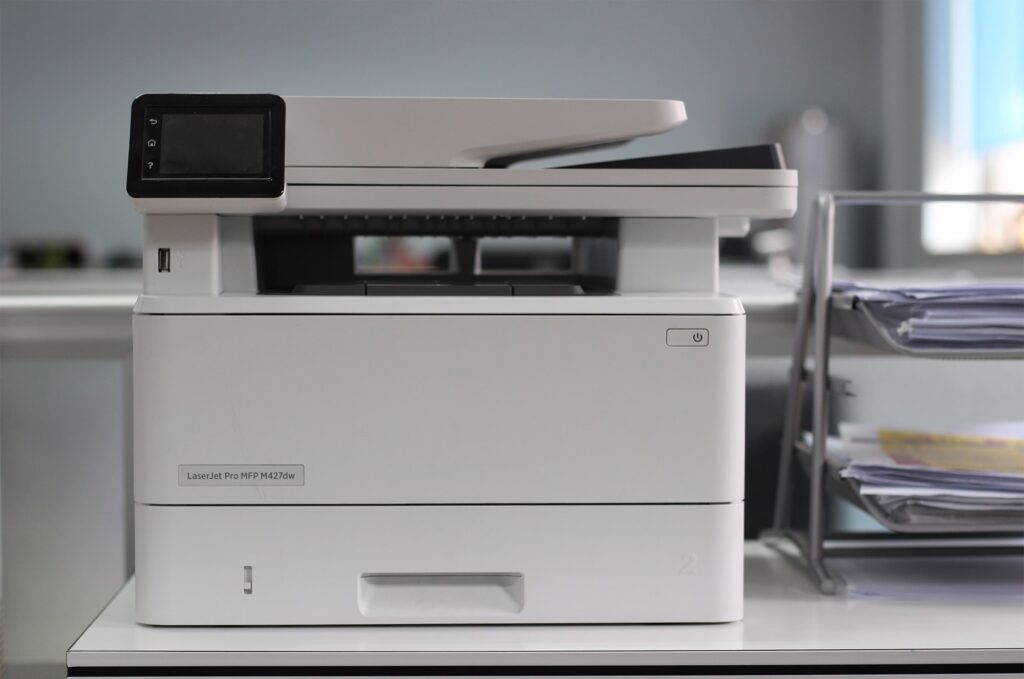
- Adjacent to every shared printer and copier. Printed materials that are not immediately collected, or that are discarded after printing, are one of the most common sources of uncontrolled sensitive paper disposal. A console within arm’s reach of the printer makes secure disposal the default behavior.
- In every conference room. Meeting participants regularly leave printed materials behind. A console in the meeting room gives those materials a secure disposal path before the room is cleaned or used by the next group.
- At reception and lobby areas. Intake forms, visitor sign-in sheets, and incoming mail opened at reception all generate paper requiring secure disposal.
- In mail and copy rooms. Centralized mail handling areas generate significant volumes of sensitive paper that needs secure disposal.
- In break rooms where mail is routinely opened. Some organizations process incoming mail in break rooms; a console there prevents documents from being placed in general trash.
- In HR and finance departments. These departments generate some of the most sensitive documents in any organization. Workstation-level or departmental consoles in these areas are particularly important.
After mapping placement, share the map with the office manager or facilities contact at each location before delivery. Local input often surfaces specific considerations that were not visible from a headquarters-level planning perspective.
Service Frequency: Matching Volume to Schedule
Service frequency is the schedule on which the vendor empties the consoles at each location. Getting this wrong in either direction creates problems: too infrequent and consoles overflow, forcing employees to leave documents in recycling; too frequent and the program costs more than necessary for the volume being generated.
Common service frequency structures for multi-location programs:
High-volume locations (large headquarters, high-density departments): weekly or biweekly service. These locations fill consoles quickly and need reliable scheduled service, often with an on-call option for unscheduled full consoles between regular visits.
Medium-volume locations (midsized offices, regional offices with 20 to 50 employees): monthly service, with on-call available when a console fills ahead of schedule.
Low-volume locations (small branch offices, satellite locations with fewer than 10 employees): quarterly service, with on-call as the primary service mechanism. For very small offices, an on-call-only program may be more practical than a scheduled frequency.
On-call service, where the vendor is contacted when a console is full rather than on a fixed schedule, works well for unpredictable volume. For locations with consistent volume, scheduled service is more reliable and reduces the management overhead of tracking console status.
Build into the service agreement an explicit provision for requesting additional service when consoles fill ahead of schedule. The last thing a compliant shredding program needs is documents left in recycling because the console was full on a Thursday and the next scheduled service is two weeks away.
Training Employees at Each Location
A console program is only as effective as employee adoption, and adoption requires training. At a single location, training can be delivered in person and reinforced by the visible presence of leadership. At multiple locations, consistency of message depends on a structured approach.
Effective training for a multi-location console rollout addresses:
- What the consoles are, why they are there, and what happens to the documents placed in them
- What types of documents must be placed in the console versus what can go in recycling (the practical rule: if it has a name, an account number, or any business information, it goes in the console)
- What should never be placed in the console (food waste, non-paper materials that damage shredding equipment)
- Who to contact if the console is full between service visits
- The service schedule so employees are not confused by the vendor’s presence during a service call
For multi-location programs, delivering consistent training is most practical through a combination of written materials, an intranet posting or email from each location’s manager, and a brief in-person or virtual session before the consoles are delivered. Assigning a local contact at each site who can answer questions and reinforce the policy reduces the burden on a central program manager.
Ongoing Program Management
The multi-location program does not manage itself after setup. Several ongoing tasks keep it functioning correctly and producing the compliance documentation the organization needs.
Certificates of destruction collection.
Every service event should produce a certificate of destruction. For multi-location programs, certificates may come from different service routes and should be collected centrally, either by the central program manager or by designated contacts at each location who forward them to a central file. A compliance gap occurs when certificates are produced but not collected, filed, or retained for the required period.
Invoice review.
Multi-location invoices can be complex, with charges for multiple locations, different service frequencies, and occasional on-call events. A regular review of the invoice against the expected service schedule and console inventory at each location catches billing errors and unauthorized service charges before they accumulate.
Location change management.
When a new office is opened, a console needs to be added to the program. When an office is closed, the console must be retrieved and the service schedule updated. When an office relocates, the service address must be updated and the consoles’ placement must be reassessed at the new location. Establishing a clear internal process for communicating these changes to the shredding vendor prevents service gaps during transitions.
Periodic compliance review.
At least annually, confirm that the console coverage at each location is still adequate for the current document volume and employee count, that all required locations are covered, and that certificates of destruction are being collected for all service events.
Frequently Asked Questions
How many shredding consoles does a location need?
A commonly used starting ratio is one console per 10 to 15 employees, but this should be adjusted based on document volume and the specific locations where sensitive documents are generated. A minimum of one console near each shared printer and one in each conference room is a practical baseline for most office environments. Departments with high sensitive document volume, such as HR, finance, and customer service, benefit from additional consoles.
Should all locations use the same shredding vendor?
For most organizations, using a single vendor for all locations is preferable because it simplifies contract management, provides a single consolidated invoice, and ensures consistent certificate of destruction documentation across all sites. If no single vendor has adequate coverage for all locations, a primary vendor for the majority of locations with supplemental local vendors for outlying offices is a workable alternative.
What is the right service frequency for a small branch office?
Small branch offices with fewer than 10 employees typically generate modest document volume and may be adequately served by quarterly scheduled service combined with on-call service for when consoles fill ahead of schedule. The key is ensuring that the on-call option is accessible and responsive, so that a full console does not result in employees placing sensitive documents in recycling.
How should certificates of destruction be managed for a multi-location program?
Certificates of destruction for every service event at every location should be collected centrally by the program manager or compliance officer. The most practical approach is to have each location’s contact forward certificates to a central file immediately upon receipt, or to use a vendor that provides digital certificates that can be emailed to a central address automatically. Certificates should be retained for the period required by applicable regulations, typically at least as long as the records that were destroyed would have been retained.
What should happen to shredding consoles when an office closes?
When an office closes, the shredding vendor should be notified to schedule final service of any documents in the consoles and to retrieve the consoles themselves. Final service should produce a certificate of destruction for the last collection. Do not leave consoles at a vacated office, as they may be accessed by new tenants or building staff. Remove them before the office is vacated.
How can a multi-location shredding program demonstrate HIPAA or GLBA compliance?
Compliance is demonstrated through documentation: the written shredding policy that covers all locations, certificates of destruction from every service event at every location, records of employee training at each site, and the vendor agreement confirming that the vendor operates as a Business Associate or with equivalent contractual protections for regulated documents. The combination of these documents establishes that the organization had a consistent, compliant program operating across all of its locations.
Emerald Document Imaging provides locked shredding console programs for businesses on Long Island and throughout the New York metro area, including multi-location deployments with coordinated service schedules, certificates of destruction for every event, and program management support for organizations operating across multiple offices.
Learn more about our Document Destruction services and request a consultation to plan your multi-location program.